
 已关闭
已关闭
- 顶部Banner位
 固定模块
固定模块
设置

BPD
试用
AI
登录/注册
企业管理端
厂家
重组人 / 小鼠 / 大鼠 / 食蟹猴 / 恒河猴 Activin A蛋白 (GMP级, HPLC验证)
 收藏
收藏 分享
重组人 / 小鼠 / 大鼠 / 食蟹猴 / 恒河猴抑制素βA链蛋白
原料试剂 研发实验室
价格
¥3480.00-38800.00
品牌 义翘神州/Sino Biological
地区 中国,北京,北京市
货号 GMP-10429-HNAH
产地 国产
选择规格
20.00 µg
100.00 µg
1.00 mg
 易享客服
易享客服
义翘神州
北京义翘神州科技股份有限公司(Sino Biological, Inc.)
北京
北京义翘神州科技股份有限公司(Sino Biological, Inc.)是一家从事生物试剂研发、生产、销售并提供技术服务的生物科技公司,主要业务包括重组蛋白、抗体、基因和培养基等产品,同时可以提供重组蛋白蛋白、抗体开发、生物分析检测等技术服务。
公司坚持自主研发并独立掌握以蛋白、抗体为核心的生物试剂创新研发全套关键技术和5大核心技术平台,拥有超过 9,300 种重组蛋白、15,000 种抗体、50,000 种基因及性能优越的无血清培养基系列产品、GMP 级核酸酶等,建立从基因克隆、蛋白表达、抗体开发与生产到质量控制研究在内的一站式 CRO 技术服务平台。现已成功研发出全长膜蛋白、激酶等高难度蛋白、数款高质量 GMP 级别细胞因子产品,具备每年自主开发 2000 种以上重组蛋白和抗体产品的技术能力,已建成全球规模领先的人源细胞表达重组蛋白生物试剂库。
公司在上海、广州、杭州、成都、武汉、苏州、泰州及美国、欧洲、日本、韩国等地设有分、子公司,产品行销 90 多个国家和地区,客户涵盖大学、科研院所、医药研发企业等 8000 余家国内外各类生物研究单位。义翘神州致力于解决生物试剂领域核心技术「卡脖子」问题,打造中国自己的生物试剂民族品牌,助力推动健康事业发展,造福人类。
进入店铺
产品规格
图文详情
技术文档
产品规格
品牌名称
义翘神州/Sino Biological
货号
GMP-10429-HNAH
国产/进口
国产
规格
20.00 µg,100.00 µg,1.00 mg
货源
新品
图文详情
Activin A Protein, Human, Mouse, Rat, Cynomolgus, Rhesus, Recombinant, HPLC-verified: Product Information
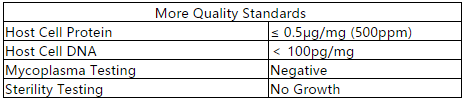
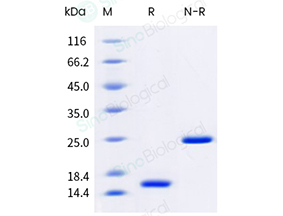
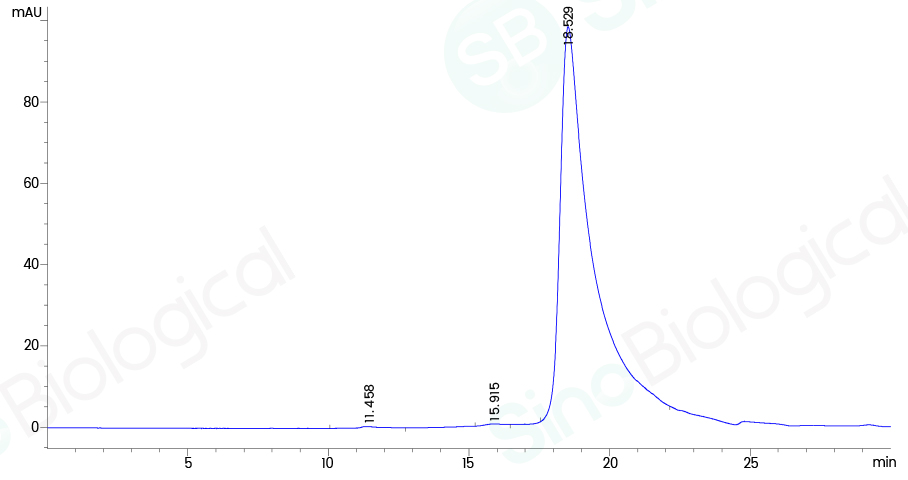
Purity≥ 95 % as determined by SDS-PAGE. ≥ 95 % as determined by SEC-HPLC.
Endotoxin<10 EU per mg protein
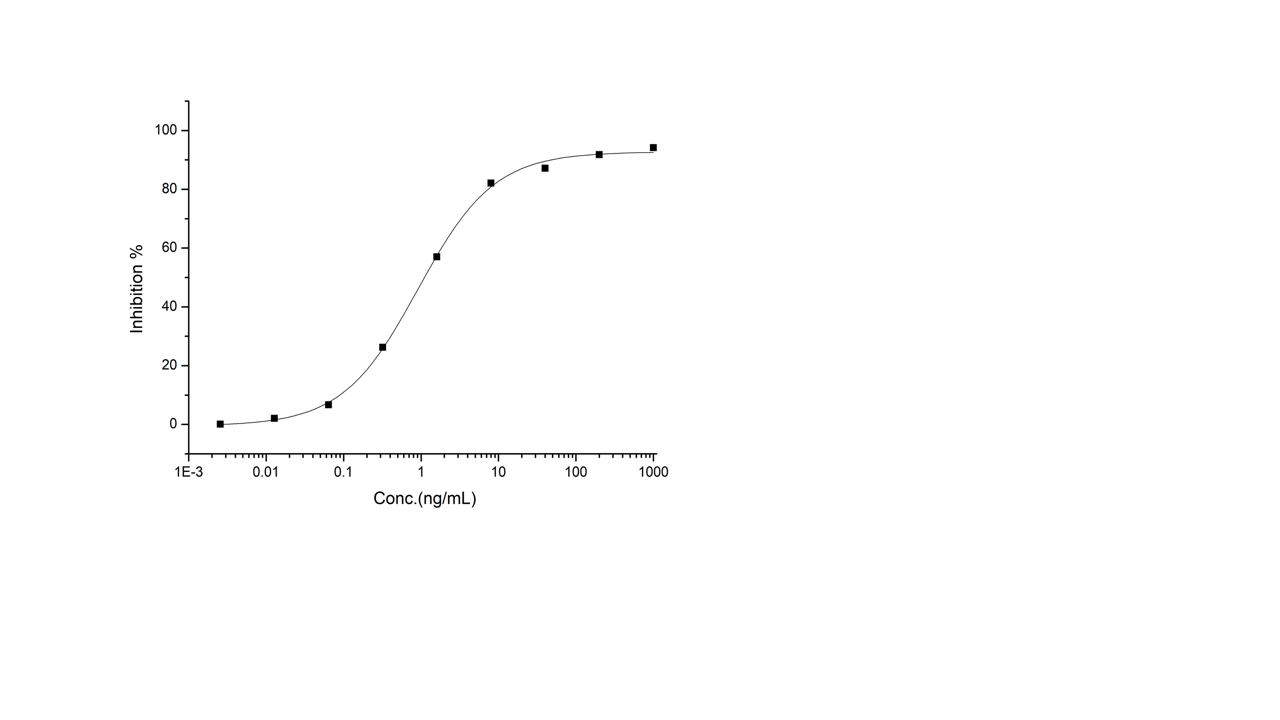
ActivityMeasured by its ability to inhibit proliferation of MPC-11 cells. The ED50 for this effect is 0.5-5ng/mL. The specific activity of recombinant human Activin A is >1000U/mg, which is calibrated against the human Activin A International Standard (NIBSC code: 91/626).
Protein ConstructionA DNA sequence encoding the Human / Mouse / Rat / Cynomolgus / Rhesus INHBA (NP_002183.1) (Gly311-Ser426) was expressed.
Expressed HostHEK293 Cells
SpeciesHuman, Mouse, Rat, Cynomolgus, Rhesus
Predicted N TerminalGly 311
Molecule MassThe recombinant human / mouse / rat / cynomolgus / rhesus INHBA consists of 116 amino acids and predicts a molecular mass of 13 kDa. It migrates as an approximately 16 kDa band in SDS-PAGE under reducing conditions and 25 KDa band in SDS-PAGE under non-reducing conditions.
FormulationSupplied as sterile 4mM HCl.
Please contact us for any concerns or special requirements.
Please refer to the specific buffer information in the hard copy of CoA.
ShippingLiquid. It is shipped out with blue ice.
Stability & StorageSamples are stable for up to twelve months from date of receipt at -20℃ to -80℃
Store it under sterile conditions at -20℃ to -80℃. It is recommended that the protein be aliquoted for optimal storage. Avoid repeated freeze-thaw cycles.
ReconstitutionA hardcopy of datasheet with reconstitution instructions is sent along with the products. Please refer to it for detailed information.
Activin A Background Information
Activin and inhibin are two closely related protein complexes that have almost directly opposite biological effects. The activin and inhibin protein complexes are both dimeric in structure, and, in each complex, the two monomers are linked to one another by a single disulfide bond. Activin is composed of two β subunits, βA βA (activin A), βB βB (activin B), or βA βB (activin AB). Inhibin is composed of an alpha and one of two β subunits, βA (inhibin A) or βB (inhibin B). Activins are produced in many cell types and organs, such as gonads, pituitary gland, and placenta. In the ovarian follicle, activin increases FSH binding and FSH-induced aromatization. It participates in androgen synthesis enhancing LH action in the ovary and testis. In the male, activin enhances spermatogenesis. Also, Activin plays a role in wound repair and skin morphogenesis. Activin is strongly expressed in wounded skin, and overexpression of activin in the epidermis of transgenic mice improves wound healing and enhances scar formation. Activin also regulates the morphogenesis of branching organs such as the prostate, lung, and kidney. There is also evidence showed that lack of activin during development results in neural developmental defects.
Full Name
inhibin, beta A
Research Areas
Early Mesodermal Lineage Markers
Purity≥ 95 % as determined by SDS-PAGE. ≥ 95 % as determined by SEC-HPLC.
Endotoxin<10 EU per mg protein
ActivityMeasured by its ability to inhibit proliferation of MPC-11 cells. The ED50 for this effect is 0.5-5ng/mL. The specific activity of recombinant human Activin A is >1000U/mg, which is calibrated against the human Activin A International Standard (NIBSC code: 91/626).
Protein ConstructionA DNA sequence encoding the Human / Mouse / Rat / Cynomolgus / Rhesus INHBA (NP_002183.1) (Gly311-Ser426) was expressed.
Expressed HostHEK293 Cells
SpeciesHuman, Mouse, Rat, Cynomolgus, Rhesus
Predicted N TerminalGly 311
Molecule MassThe recombinant human / mouse / rat / cynomolgus / rhesus INHBA consists of 116 amino acids and predicts a molecular mass of 13 kDa. It migrates as an approximately 16 kDa band in SDS-PAGE under reducing conditions and 25 KDa band in SDS-PAGE under non-reducing conditions.
FormulationSupplied as sterile 4mM HCl.
Please contact us for any concerns or special requirements.
Please refer to the specific buffer information in the hard copy of CoA.
ShippingLiquid. It is shipped out with blue ice.
Stability & StorageSamples are stable for up to twelve months from date of receipt at -20℃ to -80℃
Store it under sterile conditions at -20℃ to -80℃. It is recommended that the protein be aliquoted for optimal storage. Avoid repeated freeze-thaw cycles.
ReconstitutionA hardcopy of datasheet with reconstitution instructions is sent along with the products. Please refer to it for detailed information.
Activin A Background Information
Activin and inhibin are two closely related protein complexes that have almost directly opposite biological effects. The activin and inhibin protein complexes are both dimeric in structure, and, in each complex, the two monomers are linked to one another by a single disulfide bond. Activin is composed of two β subunits, βA βA (activin A), βB βB (activin B), or βA βB (activin AB). Inhibin is composed of an alpha and one of two β subunits, βA (inhibin A) or βB (inhibin B). Activins are produced in many cell types and organs, such as gonads, pituitary gland, and placenta. In the ovarian follicle, activin increases FSH binding and FSH-induced aromatization. It participates in androgen synthesis enhancing LH action in the ovary and testis. In the male, activin enhances spermatogenesis. Also, Activin plays a role in wound repair and skin morphogenesis. Activin is strongly expressed in wounded skin, and overexpression of activin in the epidermis of transgenic mice improves wound healing and enhances scar formation. Activin also regulates the morphogenesis of branching organs such as the prostate, lung, and kidney. There is also evidence showed that lack of activin during development results in neural developmental defects.
Full Name
inhibin, beta A
Research Areas
Early Mesodermal Lineage Markers
技术文档
 GMP级细胞因子产品手册.pdf
1.8MB 查看资料
没有您想要的资料?去索要

返回顶部


关注易享 易贸医疗在线公众号,随时畅看直播
用户服务
Terms & Conditions
Privacy Policy

商家服务
Return Policy
Contact Us
关于我们
About Us
Intellectual Property Rights
联系方式: 021-51551230
地址: 上海市长宁区金钟路999号C栋8楼
邮箱: healthcare@enmore.com