
 已关闭
已关闭
- 顶部Banner位
 固定模块
固定模块
设置

BPD
试用
AI
登录/注册
企业管理端
厂家
重组人GPRC5D 蛋白-(Detergent) (His & FLAG 标签)
 收藏
收藏 分享
重组人G 蛋白偶联受体家族 C 组 5 成员 D蛋白-(Detergent) (His & FLAG 标签)
原料试剂 研发实验室
价格
¥7770.00-27270.00
品牌 义翘神州/Sino Biological
地区 中国,北京,北京市
货号 24447-H18H-DD
产地 国产
选择规格
20.00 µg
100.00 µg
 易享客服
易享客服
义翘神州
北京义翘神州科技股份有限公司(Sino Biological, Inc.)
北京
北京义翘神州科技股份有限公司(Sino Biological, Inc.)是一家从事生物试剂研发、生产、销售并提供技术服务的生物科技公司,主要业务包括重组蛋白、抗体、基因和培养基等产品,同时可以提供重组蛋白蛋白、抗体开发、生物分析检测等技术服务。
公司坚持自主研发并独立掌握以蛋白、抗体为核心的生物试剂创新研发全套关键技术和5大核心技术平台,拥有超过 9,300 种重组蛋白、15,000 种抗体、50,000 种基因及性能优越的无血清培养基系列产品、GMP 级核酸酶等,建立从基因克隆、蛋白表达、抗体开发与生产到质量控制研究在内的一站式 CRO 技术服务平台。现已成功研发出全长膜蛋白、激酶等高难度蛋白、数款高质量 GMP 级别细胞因子产品,具备每年自主开发 2000 种以上重组蛋白和抗体产品的技术能力,已建成全球规模领先的人源细胞表达重组蛋白生物试剂库。
公司在上海、广州、杭州、成都、武汉、苏州、泰州及美国、欧洲、日本、韩国等地设有分、子公司,产品行销 90 多个国家和地区,客户涵盖大学、科研院所、医药研发企业等 8000 余家国内外各类生物研究单位。义翘神州致力于解决生物试剂领域核心技术「卡脖子」问题,打造中国自己的生物试剂民族品牌,助力推动健康事业发展,造福人类。
进入店铺
产品规格
图文详情
技术文档
产品规格
品牌名称
义翘神州/Sino Biological
货号
24447-H18H-DD
国产/进口
国产
规格
20.00 µg,100.00 µg
货源
新品
图文详情
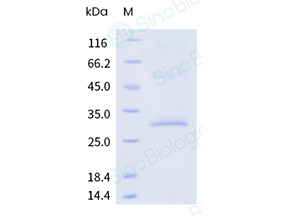
纯度≥ 80 % as determined by SDS-PAGE.
内毒素< 1.0 EU per μg protein as determined by the LAL method.
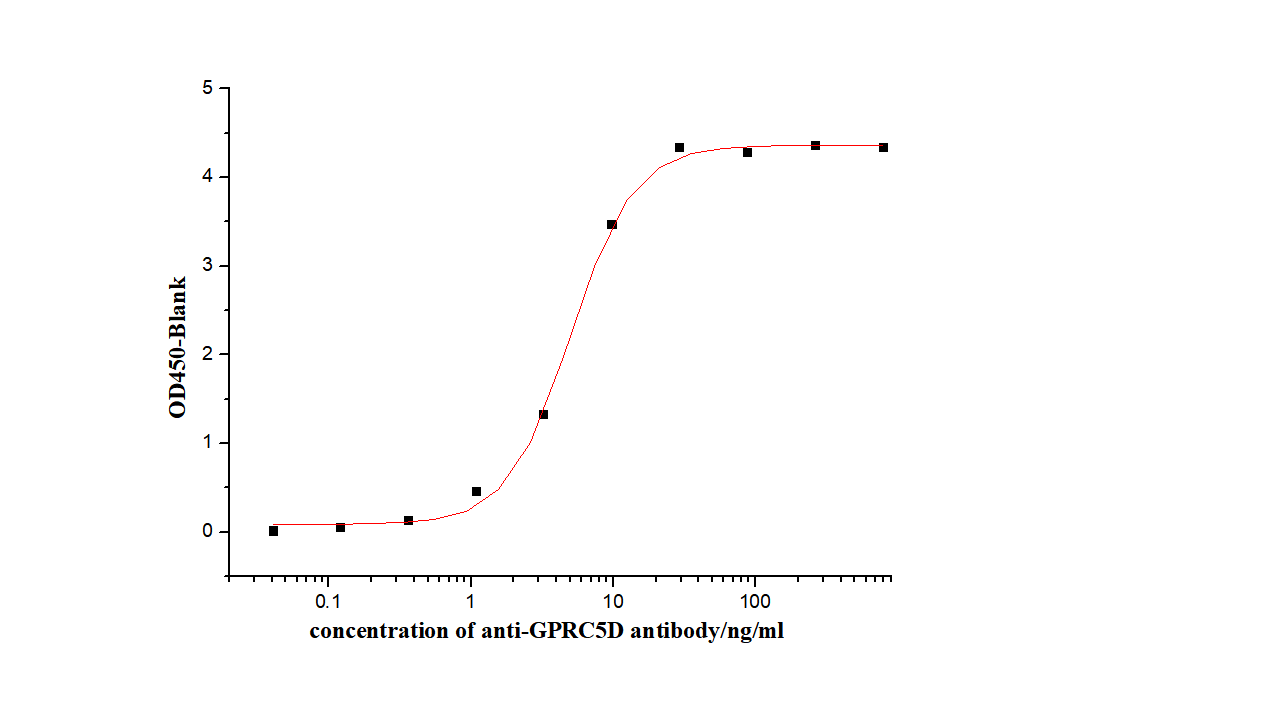
生物活性1.Immobilized Human GPRC5D Protein(Cat:24447-H18H-DD) at 5 μg/mL (100 μL/well) on Nickel coated plate can bind Anti-Human GPRC5D Antibody, Human IgG1, the EC50 is 4.0 ng/ml(QC tested).
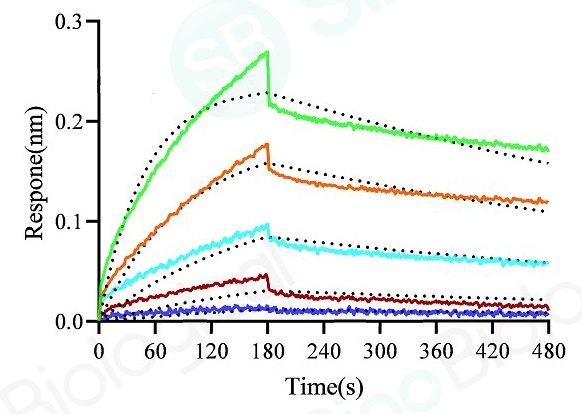
2.Loaded Anti-GPRC5D Antibody on Protein A Biosensor, can bind GPRC5D Protein(Cat:24447-H18H-DD) with an affinity constant of 58.1 nM as determined in BLI assay (Sartorius Octet Red384) (Routinely tested).
蛋白构建A DNA sequence encoding the human GPRC5D (Q9NZD1) (Met1-Ser268) was expressed, with a Flag tag at the N-terminus and a polyhistidine tag at the C-terminus.
表达宿主HEK293 Cells
种属Human
预测 N 端Met
分子量The recombinant human GPRC5D consists of 286 amino acids and predicts a molecular mass of 32.83 kDa.
缓冲液Supplied as solution in 10mM HEPES, 50mM NaCl, DDM, pH7.5 with glycerol as protectant. DDM is cytotoxicity and not suitable for cell based experiments. Never remove DDM as it is necessary to the activity of the protein. Do not store the protein without glycerol.
Please contact us for any concerns or special requirements.
Please refer to the specific buffer information in the hard copy of CoA.
运输方式It is supplied and shipped as liquid with dry ice.
稳定性 & 储存条件Samples are stable for up to three months from date of receipt at -70℃. Store it under sterile conditions at -70℃ or lower. It is recommended that the protein be aliquoted for optimal storage. Avoid repeated freeze-thaw cycles.
GPRC5D Protein, Human, Recombinant (His & FLAG Tag): 别称
GPRC5D Protein, Human
GPRC5D 背景信息
Orphan G-protein-coupled receptor family C group 5 member D (GPRC5D) has seven transmembrane segments forming the core of the receptor, as well as an intracellular C-tail and an extracellular N-terminal domain. GPRC5D is highly and selectively expressed on the surface of CD138+ multiple myeloma (MM) cells, whereas in normal tissues, a much lower expression is limited to plasma cells and certain hard keratinizing tissues. This makes GPRC5D a promising marker for monitoring tumor load and a target antigen for MM-specific T cell-engaging therapies such as bispecific antibodies and CAR-T cells.
内毒素< 1.0 EU per μg protein as determined by the LAL method.
生物活性1.Immobilized Human GPRC5D Protein(Cat:24447-H18H-DD) at 5 μg/mL (100 μL/well) on Nickel coated plate can bind Anti-Human GPRC5D Antibody, Human IgG1, the EC50 is 4.0 ng/ml(QC tested).
2.Loaded Anti-GPRC5D Antibody on Protein A Biosensor, can bind GPRC5D Protein(Cat:24447-H18H-DD) with an affinity constant of 58.1 nM as determined in BLI assay (Sartorius Octet Red384) (Routinely tested).
蛋白构建A DNA sequence encoding the human GPRC5D (Q9NZD1) (Met1-Ser268) was expressed, with a Flag tag at the N-terminus and a polyhistidine tag at the C-terminus.
表达宿主HEK293 Cells
种属Human
预测 N 端Met
分子量The recombinant human GPRC5D consists of 286 amino acids and predicts a molecular mass of 32.83 kDa.
缓冲液Supplied as solution in 10mM HEPES, 50mM NaCl, DDM, pH7.5 with glycerol as protectant. DDM is cytotoxicity and not suitable for cell based experiments. Never remove DDM as it is necessary to the activity of the protein. Do not store the protein without glycerol.
Please contact us for any concerns or special requirements.
Please refer to the specific buffer information in the hard copy of CoA.
运输方式It is supplied and shipped as liquid with dry ice.
稳定性 & 储存条件Samples are stable for up to three months from date of receipt at -70℃. Store it under sterile conditions at -70℃ or lower. It is recommended that the protein be aliquoted for optimal storage. Avoid repeated freeze-thaw cycles.
GPRC5D Protein, Human, Recombinant (His & FLAG Tag): 别称
GPRC5D Protein, Human
GPRC5D 背景信息
Orphan G-protein-coupled receptor family C group 5 member D (GPRC5D) has seven transmembrane segments forming the core of the receptor, as well as an intracellular C-tail and an extracellular N-terminal domain. GPRC5D is highly and selectively expressed on the surface of CD138+ multiple myeloma (MM) cells, whereas in normal tissues, a much lower expression is limited to plasma cells and certain hard keratinizing tissues. This makes GPRC5D a promising marker for monitoring tumor load and a target antigen for MM-specific T cell-engaging therapies such as bispecific antibodies and CAR-T cells.
技术文档
没有您想要的资料?去索要

返回顶部


关注易享 易贸医疗在线公众号,随时畅看直播
用户服务
Terms & Conditions
Privacy Policy

商家服务
Return Policy
Contact Us
关于我们
About Us
Intellectual Property Rights
联系方式: 021-51551230
地址: 上海市长宁区金钟路999号C栋8楼
邮箱: healthcare@enmore.com